
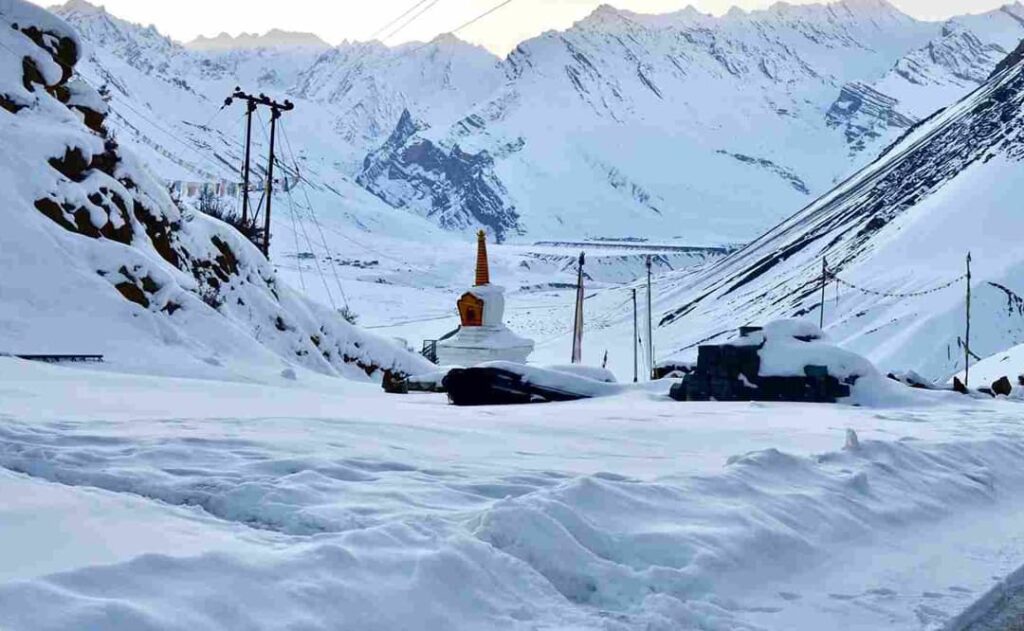
About Spiti Valley
Spiti Valley is located in the northeastern part of India's Himachal Pradesh state, bordering the Qinghai-Tibet Plateau to the east, with Kaza serving as its administrative center. With an average elevation of around 12,500 feet, it is one of the highest human settlements on Earth.
Unlike other commercialized, popular mountain resorts across India, Spiti Valley has retained its original, unspoiled character, meeting the needs of a wide range of travelers including photography enthusiasts, outdoor hikers, road trip fans, and cultural explorers.
Why is Spiti Valley Called the Cold Desert?
The area is known as a "cold desert," a label derived from its unique topography and climate: the towering Himalayan Mountains block warm, moist monsoon winds from penetrating deep into the valley, leading to extremely low annual rainfall. The valley is covered in thick snow in winter, and stays dry with little rain in summer. Frost conditions last for more than half of the year, forming an overall cold, barren landscape similar to a desert.
At a Glance: Top Places to Visit in Spiti Valley
The 8 core must-visit attractions in the valley each have their own unique standout features.
| Attraction | Known For |
|---|---|
| Key Monastery | Oldest Tibetan Buddhist monastery in Spiti |
| Kaza | Core material supply hub of the entire valley |
| Chandratal Lake | One-of-a-kind landscape of a full moon reflecting on its surface |
| Langza Village | Well-known paleontological fossil village |
| Hikkim Village | World's highest-altitude post office |
| Komic Village | India's officially recognized highest permanent human settlement |
| Dhankar Monastery | Built on the isolated summit of a cliff |
| Pin Valley National Park | Core habitat of rare plateau species including the snow leopard |
🚗 Planning a Spiti Valley road trip? Organize your itinerary around these 8 core attractions.
View 6-Day Itinerary →Top Places to Visit in Spiti Valley
The 8 core must-visit attractions in the valley each have their own unique standout features.

1. Key Monastery
Oldest Tibetan Buddhist Monastery in Spiti
Key Monastery is the oldest Tibetan Buddhist monastery in Spiti.

2. Kaza
Core Material Supply Hub of the Valley
Kaza is the core material supply hub of the entire valley.
3. Chandratal Lake
The Moon Lake
Chandratal Lake is famous for its one-of-a-kind landscape of a full moon reflecting on its surface.
4. Langza Village
The Fossil Village
Langza Village is a well-known paleontological fossil village.
5. Hikkim Village
World's Highest-Altitude Post Office
Hikkim Village hosts the world's highest-altitude post office.
6. Komic Village
India's Highest Permanent Human Settlement
Komic Village is India's officially recognized highest permanent human settlement.
7. Dhankar Monastery
Built on the Isolated Summit of a Cliff
Dhankar Monastery was built on the isolated summit of a cliff.
8. Pin Valley National Park
Habitat of the Snow Leopard
Pin Valley National Park is the core habitat of rare plateau species including the snow leopard.
Best Time to Visit Spiti Valley
The valley's travel windows cater to different groups of travelers based on season:
Summer (May to June)
Every summer from May to June, all mountain access roads are fully open, and temperatures are mild and comfortable, making this the best period for general visitors to plan a trip.
Monsoon (July to September)
In the rainy season from July to September, the two core routes leading into the valley from Shimla and Manali remain passable for most of the period, only occasionally interrupted by unexpected landslides.
Autumn (September to October)
In autumn from September to October, the number of visitors to the valley drops sharply. The clear weather and mountain slopes covered in multicolored autumn foliage create ideal conditions for photography.
Winter (November to March)
In winter from November to March of the following year, heavy snow blocks all access roads and drastically raises the difficulty of travel, making this period only suitable for seasoned outdoor travelers, who can enjoy the exclusive experience of a silent, pristine snow-covered wilderness.
How to Reach Spiti Valley
Next, we will provide a detailed breakdown of the full transportation planning scheme for entering Spiti Valley.
Travelers planning an independent trip to the Spiti Valley can organize all practical information following the core logic of itinerary planning.
Via Manali
First, finalize transportation to enter the valley. Currently, there are two highways leading into the valley. One extends along the Manali-Lahaul Mountain Highway, which is only open annually from June to October after snowmelt, and is suitable for self-driving and chartered-car tourists who prefer to enjoy scenery along the route.
Via Shimla
The other highway, which runs from Shimla via Kaza, is passable for most of the year, making it a better fit for solo backpackers who travel off-peak.
Nearest Airport and Railway Station
The external transport hubs connecting to the valley are Bhuntar Airport, the closest airport to the valley's entry point, and Kalka Railway Station, where travelers can take a connecting bus to enter the mountainous area. Both hubs have stable connecting transport capacity to the valley, and seats can be reserved one week in advance.
Packing According to the Season
Next is the core basis for packing luggage.
As a high-altitude valley, Spiti sees volatile weather year-round.
Spring (March to May)
In spring (March to May), temperatures stay between 0℃ and 15℃, so a windproof hardshell jacket is required.
Summer (June to August)
In summer (June to August), temperatures range from 10℃ to 20℃ with an extremely large diurnal temperature difference, so an extra warm mid-layer garment must be added.
Autumn (September to November)
In autumn (September to November), temperatures range from -2℃ to 12℃, with frequent early snowfalls, so a thick down jacket is needed.
Winter (December to February)
In winter (December to February), temperatures range from -15℃ to -5℃, only a small number of fixed routes are passable, so a full set of extreme cold-weather insulation gear must be prepared.
Local Culture and Traditions
Finally, Spiti's local culture has formed stable traditions after centuries of influence from Tibetan Buddhism. Local events including the Shoton Festival and the Harvest Sacrifice retain complete ceremonial procedures, and the local community has always upheld the core principles of respecting nature and supporting neighboring communities.
Travelers need to learn relevant local etiquette in advance to better integrate into the local rhythm of life.
Practical Travel Information
If you are planning a trip to Spiti Valley in India's Himalayan region, this travel guide, which integrates practical information covering the full chain of needs from pre-trip preparation to on-the-ground execution, will fully meet all your core needs throughout your journey.
We have originally organized 8 parallel core functional modules following the chronological order of a tourist's trip, to let you quickly look up the content you need.
Temple Visit Etiquette
The first module covers etiquette for temple visits: you must dress appropriately, and obtain advance consent before taking photos of local residents.
Wildlife and Natural Scenery
The second module is an introduction to the region's wildlife and natural scenery. Spiti's extreme climate has not hindered local biodiversity; the area is home to 8 representative wild species including snow leopards and Himalayan wolves. Summer-blooming wildflowers create a sharp visual contrast with the region's bare mountains, and the area is also very suitable for outdoor activities such as birdwatching and hiking.
Recreational Activities
The third module lists available recreational activities: you can visit temples, pursue mountain photography, camp at Chandratal Lake, dig for fossils in Langza Village, wander through local villages, stargaze at the Himalayan night sky, or hike into remote areas. The valley's highways are also well-suited for cycling and motorcycle road trips, and small cafes in Kaza, the valley's core town, serve Indian, Tibetan, and continental European cuisine.
Local Cuisine
The fourth module covers recommended local cuisine, including 7 signature dishes: thukpa, momos, tingmo, butter tea, tsampa, yak cheese, and noodle soup.
Responsible Travel Guidelines
The fifth module is responsible travel guidelines: bring a reusable water bottle and do not litter to support local plastic recycling efforts; only hike on designated trails, follow the rule of silence in temples, and prioritize spending at local businesses. Ecological protection is a core prerequisite for preserving the valley's natural landscapes and addressing climate change and pollution.
Pre-Trip Packing List
The sixth module is a pre-trip packing list, which includes 13 essential items such as warm jackets, thermal underwear, and comfortable hiking boots; visitors should also note that local temperatures drop sharply after dusk in summer.
High-Altitude Health Precautions
The seventh module outlines high-altitude health precautions: Spiti is a high-altitude region, so visitors face a high risk of developing Acute Mountain Sickness (AMS). If you experience symptoms such as headaches or nausea, get sufficient rest, drink plenty of water, avoid alcohol, and do not ascend to higher elevations too quickly during your first day in the region.
If you develop severe symptoms, descend to a lower altitude to seek medical care immediately.
Suggested 6-Day Itinerary
The final module is a 6-day leisurely itinerary specifically designed to adapt to gradual elevation changes, with daily stops as follows: travel from Shimla to Narkanda or Kalpa; head to Nako, stopping to visit Tabo along the way; stop to tour Dhankar Monastery before arriving in Kaza; visit Ki Monastery and villages including Giba; explore Pin Valley National Park; visit Chandratal Lake before traveling to Manali. This phased itinerary is designed to help tourists gradually adapt to elevation changes.
Conclusion
Spiti Valley is home to ancient Tibetan-style monasteries, isolated remote villages, majestic and awe-inspiring mountain scenery, and unique local cultures that have been passed down for centuries. It can meet the cross-country exploration needs of adventure enthusiasts, fit the creative scenarios of photography lovers, and support the in-depth travel requirements of tourists seeking cultural experiences.
Precisely because the region's travel resources carry both scarcity and protection requirements, all tourists planning to visit must make advance travel arrangements and abide by responsible travel guidelines.
Frequently Asked Questions About Spiti Valley
-
The towering Himalayan Mountains block warm, moist monsoon winds from penetrating deep into the valley, leading to extremely low annual rainfall. The valley is covered in thick snow in winter and stays dry with little rain in summer, with frost conditions lasting more than half the year.
-
May to June is the best period for general visitors, when all mountain access roads are fully open and temperatures are mild. September to October is ideal for photography, while November to March is only suitable for seasoned outdoor travelers due to heavy snow.
-
You can enter via the Manali-Lahaul Mountain Highway (open June to October) or via Shimla through Kaza, which is passable most of the year. The nearest airport is Bhuntar Airport, and the nearest railway station is Kalka Railway Station.
-
Packing needs change by season: a windproof hardshell jacket in spring, a warm mid-layer in summer, a thick down jacket in autumn, and full extreme cold-weather insulation gear in winter. See Module 6 for the complete pre-trip packing list.
-
Yes, Spiti is a high-altitude region and visitors face a high risk of developing AMS. If you experience headaches or nausea, rest, drink plenty of water, avoid alcohol, and do not ascend too quickly on your first day. Descend to a lower altitude immediately if symptoms become severe.
-
The 8 core must-visit attractions are Key Monastery, Kaza, Chandratal Lake, Langza Village, Hikkim Village, Komic Village, Dhankar Monastery and Pin Valley National Park.